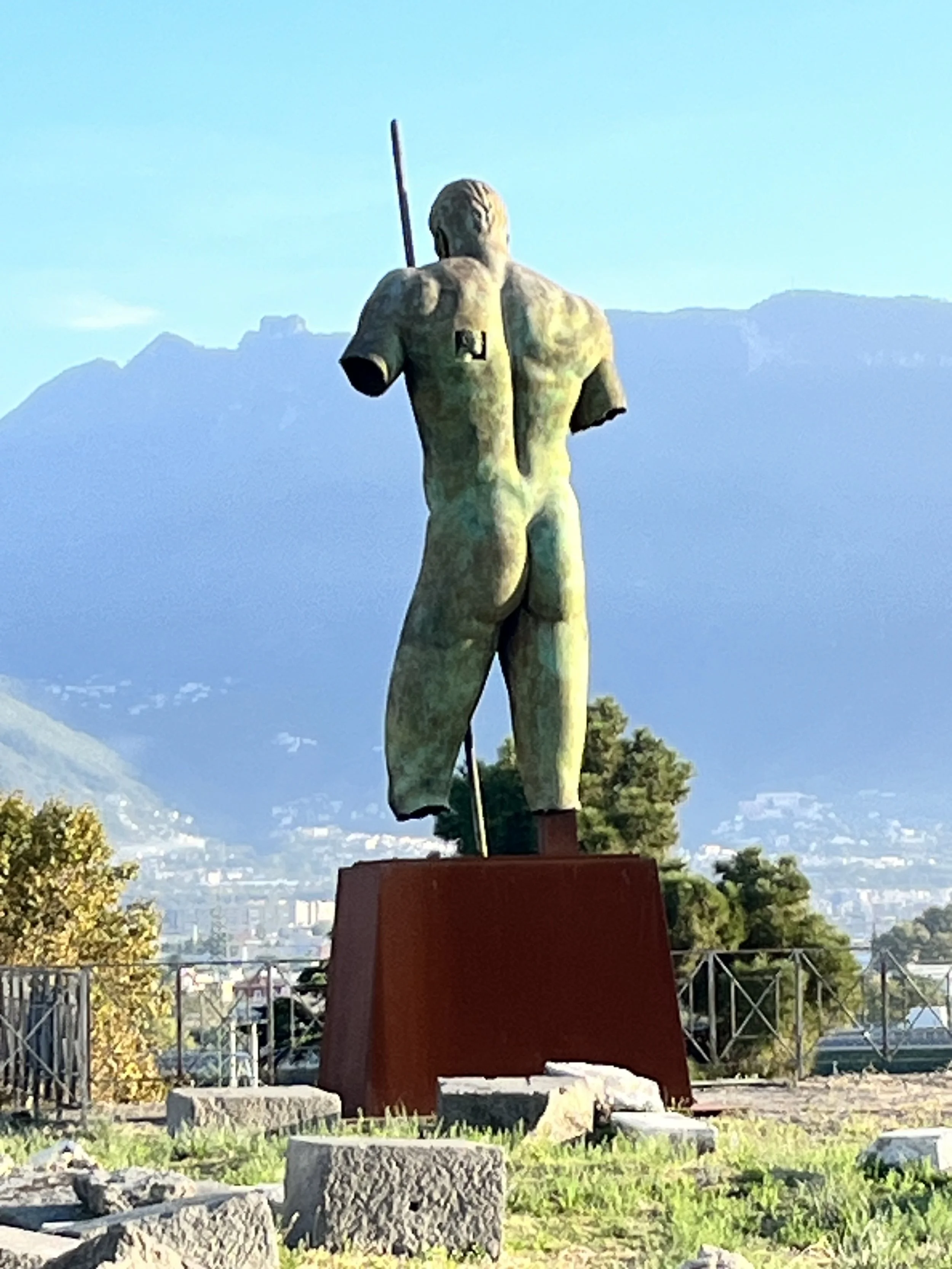
Hidden Histories Italy 2027
A hosted experience for LGBTQ history lovers. 11 days / 10 nights • 5 nights Rome • 5 nights Naples
Hidden Histories Italy is a small-group LGBTQ+ history tour of Rome and Naples, created by Chosen Atlas with documentary filmmaker Neil Laird, who travels with the group throughout.
Follow the evidence behind queer history, from the Caesars to modern Naples, then enjoy it properly: two carefully chosen hotels, one main experience most days, long lunches, good food and wine, and plenty of time to explore or rest at your own pace.
14 September 2027 · 11 nights · maximum 10 guests · from US$6,250
How gay were the Caesers?
Why are two men making love in a 2,500-year-old tomb? Did an emperor turn his dead lover into a god? And did Naples really have a third gender?
Hidden Histories: Italy is eleven days spent chasing the queer stories hiding in plain sight across Rome, Lazio, Pompeii, Capri and Naples. We’ll go to the places where these stories happened, look at the evidence, meet experts who know them inside out — and try to work out what really happened.
Some of the stories are well documented. Others are fragmentary, controversial or have only recently been looked at in a different way. That’s part of the fun. We’re not going to pretend history gives us neat answers when it doesn’t.
And because this is Italy, we’re not doing seven archaeological sites a day from the window of a coach. There’ll be long lunches, good food and wine, beautiful surroundings, two carefully chosen hotels and plenty of time to wander off and enjoy Italy on your own.
This is a holiday. It just happens to come with some very good mysteries.
Eleven days. Ten nights. A very good time.
This isn’t a history tour, it’s an investigation
For more than thirty years, documentary filmmaker and author Neil Laird has travelled the world making television about archaeology, ancient history and historical mysteries. Hidden Histories takes that way of working and turns it into a journey.
We start with a question (or 3)
How gay were the Caesars?
Who erased Michelangelo’s men?
Were the two men who died together at Pompeii lovers?
Then we go looking for answers. We’ll visit the places where the stories unfolded, examine what survives, meet people who can take the investigation further and separate what we actually know from what people have been saying for centuries.
Think of it as joining a historical documentary investigation — except nobody yells “cut,” and lunch is considerably better.
Ancient Lives, Hidden Stories
Italy is full of history we think we already know: emperors, artists, ruins, villas, temples and magnificent cities. Look a little closer and another Italy begins to emerge.
There are emperors whose relationships with men were recorded by ancient writers. A young man whose death devastated Hadrian and who was worshipped as a god. Erotic images hidden inside Etruscan tombs.
Bodies at Pompeii that have inspired very modern assumptions about ancient relationships. And centuries of queer lives that don’t always fit comfortably into the categories we use today.
Some of these stories have been overlooked. Some have been deliberately obscured. And some may not mean what we once thought they did. That’s where the investigation begins.
History, But Make It a Holiday
There is a serious amount of history here. But nobody is getting marched around Italy from dawn until dusk clutching a headset.
Most days revolve around one main investigation, giving us time to follow a story properly rather than racing to tick another monument off a list.
There’ll also be long lunches, good wine, time to wander, beautiful places to sit and do absolutely nothing, and evenings when the only historical mystery you need to solve is what to order for dinner.
We want you to come home with great stories. Not archaeological-site fatigue.
Neil brings the stories. Chosen Atlas creates the journey.
Gay history. Sun. Food. Rome & Naples.
11 days in stunning Italy, with a few things you wouldn't find on your own.
HIDDEN HISTORIES: ITALY 2027
HIDDEN HISTORIES: ITALY 2027
This is your itinerary. Plenty to explore
-
Locations
Rome hotel • Centro Storico • welcome dinnerGuests arrive and settle in. Nothing scheduled until drinks and dinner that evening.
Over dinner, I introduce how the trip works. We’re going to spend the next ten days investigating stories about same-sex desire, love, sex and gender that have been obscured, rewritten, sensationalized or forgotten.
One issue will keep coming up: words such as gay, straight and transgender don’t always fit comfortably when we’re dealing with people who lived hundreds or thousands of years ago.
Tomorrow we test that on the men who ruled Rome.
-
Locations
Palatine Hill • Roman Forum • Capitoline Museums/imperial portrait collection • additional imperial location TBDWe begin with Julius Caesar and the allegation that followed him throughout his political career: that as a young man he had an affair with King Nicomedes of Bithynia.
Why did Caesar’s enemies keep using it against him? Was sleeping with another man the scandal, or was the problem what Caesar was alleged to have done with him?
From Caesar we move into some of the more extraordinary stories about Rome’s emperors.
Caligula was accused of relationships with men as well as women, although much of what survives about his sex life comes from writers who despised him.
Nero gives us the remarkable story of Sporus, whom Nero had castrated and ceremonially married. Ancient writers also describe Nero himself taking the female role in another marriage to a man.
Then there’s Elagabalus: male lovers, an alleged husband, feminine presentation and ancient claims about wanting to alter his body. How much reflects the emperor himself, and how much comes from hostile writers trying to portray him as depraved?
We also introduce Hadrian, whose relationship with Antinous appears rather different. We save that story for Tivoli.
By the end of the investigation, our original question has become harder to answer. Roman sexual culture was heavily shaped by status, masculinity, citizenship, power and sexual role.
Free afternoon.
-
Locations
Piazza del Campidoglio • Cavalieri location/special access TBD • Santa Maria in Aracoeli optional • Santa Maria sopra Minerva
Possible: Palazzo Farnese with worthwhile special access
Skip for now: Sistine ChapelWe start at Piazza del Campidoglio, somewhere visually unmistakably Roman and closely connected with Michelangelo’s later life.
It also gives us a way into Tommaso de’ Cavalieri, who later helped oversee the execution of Michelangelo’s plans for the Campidoglio.
Michelangelo met the much younger Roman nobleman in 1532, when Michelangelo was 57. He wrote passionate poetry to Tommaso and gave him extraordinary drawings, including Ganymede and The Fall of Phaeton.
What exactly was their relationship?
From here, we try to follow Cavalieri into Rome itself. We need to establish whether his house or another surviving location connected with him is visually worthwhile. An even better possibility would be special access to an original Michelangelo letter, poem, drawing or early edition.
Close to the Campidoglio, Santa Maria in Aracoeli could be a brief stop. Michelangelo designed the tomb of the young Cecchino Bracci and wrote a series of epitaphs for him. The church is impressive; the tomb itself doesn’t justify making this a major destination.
Palazzo Farnese works only if we can arrange access that feels special. Standing outside looking at the building isn’t enough.
Then Santa Maria sopra Minerva, where Michelangelo’s nude Risen Christ was subsequently given a bronze covering over the genitals. Here guests can stand close to an actual Michelangelo and see a physical example of later censorship.
Then the literary reveal.
Michelangelo’s grand-nephew published his poetry in 1623 and changed masculine references to feminine ones in some of the poems. We can give guests Michelangelo’s original wording alongside the altered version and let them see what changed.
The big thing still to find is one really strong Michelangelo/Cavalieri location or special-access experience.
-
Locations
Hadrian’s Villa • Canopus/Serapeum • Antinous/Egyptian material • lunch • possibly Villa d’EsteIn AD 130, Emperor Hadrian was traveling through Egypt with a young man named Antinous.
Antinous drowned in the Nile.
Was it an accident? Suicide? Ritual sacrifice? Ancient accounts disagree, and the mystery has never been resolved.
At Hadrian’s Villa, we investigate the relationship and the theories surrounding Antinous’s death with a specialist.
The Egyptian elements of the villa give us a physical connection to the world in which Antinous died.
Then comes Hadrian’s response.
He founded Antinoopolis in Egypt. Images of Antinous appeared throughout the empire. The young man was depicted as different gods and became the center of a cult.
How did someone who drowned in the Nile become one of the most recognizable faces in the Roman world?
After the investigation, lunch and perhaps Villa d’Este for the gardens and fountains if the timing works. It gives guests something completely different after the archaeology.
-
Locations
Tarquinia • Monterozzi Necropolis • Tomb of the Bulls • National Archaeological Museum • old town/lunchInside the sixth-century BCE Tomb of the Bulls is an explicit image of sexual activity between two males.
What we don’t know is why somebody painted it inside a tomb.
Was it erotic? Comic? Symbolic? Protective? Does it have anything to do with death? And how much can one image tell us about sex between men in Etruscan society?
Elsewhere in the tomb is Achilles ambushing Troilus, adding another piece of evidence to consider.
This is a good place to bring in an Etruscan specialist because we may finish with several possible explanations rather than one answer.
A priority is seeing whether we can arrange special access to the Tomb of the Bulls itself. That could make this one of the trip’s standout experiences.
Museum, lunch and some time in old Tarquinia before returning to Rome.
-
ILocations
Rome • high-speed train • Naples hotel • NaplesSleep in. Train to Naples. Check into our second hotel.
The rest of the day is free.
Pizza, drinks, shopping, wandering, sleeping. No organized sightseeing.
Maybe one teaser over drinks:
“Stay tuned. Tomorrow: two men, one volcano and a queer mystery nearly 2,000 years in the making.”
-
Locations
Pompeii Archaeological Park • find spot/current display of the two victims TBD • selected houses, casts, graffiti and sexual imageryTwo people died together when Vesuvius destroyed Pompeii.
For years they were popularly known as the Two Maidens.
Scientific investigation later established that they were male, which raised another possibility: were these two men who died together actually lovers?
We go looking at the evidence.
Where were they found? What can their positions tell us? What has scientific analysis established? Could they have been relatives, friends or simply two frightened people together when the eruption caught them?
And can science ever tell us whether two people were in love?
The old “Two Maidens” identification is part of the story. Archaeologists had already created one interpretation when they thought the bodies were female. Once they were known to be male, another story quickly took its place.
Pompeii gives us plenty of other evidence about sex, relationships and everyday life. We use it selectively rather than turning the day into a tour of Roman erotica.
We still need to confirm exactly what guests can see of these two victims today and whether we can involve an archaeologist familiar with the current research.
-
Locations
Paestum Archaeological Park • Greek temples • National Archaeological Museum • Tomb of the Diver • mozzarella farm/countryside lunchBy now we’ve spent several days encountering Roman ideas about sex between men.
At Paestum we enter a Greek world.
Did Greek men operate under the same rules?
We explore male courtship, age, beauty, desire, friendship and the social world of the symposium.
Then we encounter the Tomb of the Diver.
Its painted symposium scenes show men reclining together, drinking, playing and interacting physically. By this point guests have Rome, Tarquinia and Pompeii as points of comparison, so these paintings become evidence in a much larger investigation.
The Greek temples give the day plenty of visual impact.
Afterward, head into the countryside for mozzarella, wine and a long lunch.
-
Locations
Boat from Naples • Marina Grande • Villa Lysis • Capri town • Wilde/Krupp locations where worthwhile • lunch • boat/swim/free timeWe now move much closer to modern gay history.
By the late 19th and early 20th centuries, Capri had become a magnet for artists, writers, wealthy outsiders and men looking for freedoms they couldn’t find at home.
Oscar Wilde and Lord Alfred Douglas came here after Wilde’s release from prison.
German industrialist Friedrich Alfred Krupp spent long periods on Capri before allegations about his private life on the island erupted into scandal.
And Jacques d’Adelswärd-Fersen, after a sexual scandal in Paris, came to Capri and created a new life here.
His Villa Lysis is our main physical location.
Why Capri?
How much freedom came from the island, and how much came from being wealthy foreigners? What happened when the outside world caught up with them? And were all the relationships later generations have romanticized actually relationships between equals?
Then we stop programming.
Long lunch, boat or swimming if practical, drinks, wandering and free time.
Capri should be the most leisurely day of the trip.
-
Locations
Historic Naples neighborhood(s) • femminielli community connection • Four Days of Naples location/memorial • meeting with local historian/community voice • farewell dinnerFor generations, Neapolitan culture has recognized people known as femminielli.
The term doesn’t translate neatly into gay man, drag queen or trans woman. Traditionally, femminielli were people born male who lived outside conventional masculine roles and occupied a distinctive place within parts of Neapolitan society.
They became associated with good luck and particular neighborhood traditions. There were bawdy tombola games, symbolic weddings and the figliata, a mock pregnancy and childbirth.
Femminielli also have a connection with popular Catholicism and the traditional Candelora pilgrimage to Montevergine.
How did this identity function within such a strongly Catholic culture?
Then we reach the Second World War.
Accounts of the Four Days of Naples in 1943, when Neapolitans rose against German occupation, include femminielli among those who joined the resistance.
Ideally, this investigation is built around people as much as places. We meet someone who knows the history and someone with a personal connection to the tradition or contemporary queer Naples.
Were femminielli a third gender? How accepted were they? And what happens to this old Neapolitan identity as modern gay, trans and nonbinary identities develop?
We need the right local partner to help us identify the strongest locations and shape this day properly.
Farewell dinner in Naples.
-
ROLL CREDITS
Breakfast and departures.
Price from $6250
no payment required at this stage
Sounds good so far? Drop your name in below and we’ll keep you up to date with all the details and answer any questions within 24 hours
Meet Neil - Your History Host
Neil Laird is an Emmy- and BAFTA-nominated documentary filmmaker, novelist and public speaker whose work has taken him to more than seventy countries.
Over a career spanning more than three decades, he has produced documentaries for the BBC,
National Geographic, Discovery Channel, PBS and other major broadcasters, specialising in archaeology, ancient history and the mysteries of the past.
For Hidden Histories, Neil brings the approach he uses when developing a documentary: start with a great question, go to the place where it happened, find the evidence, talk to the people who know it best — and never assume the story you were told is the whole story.
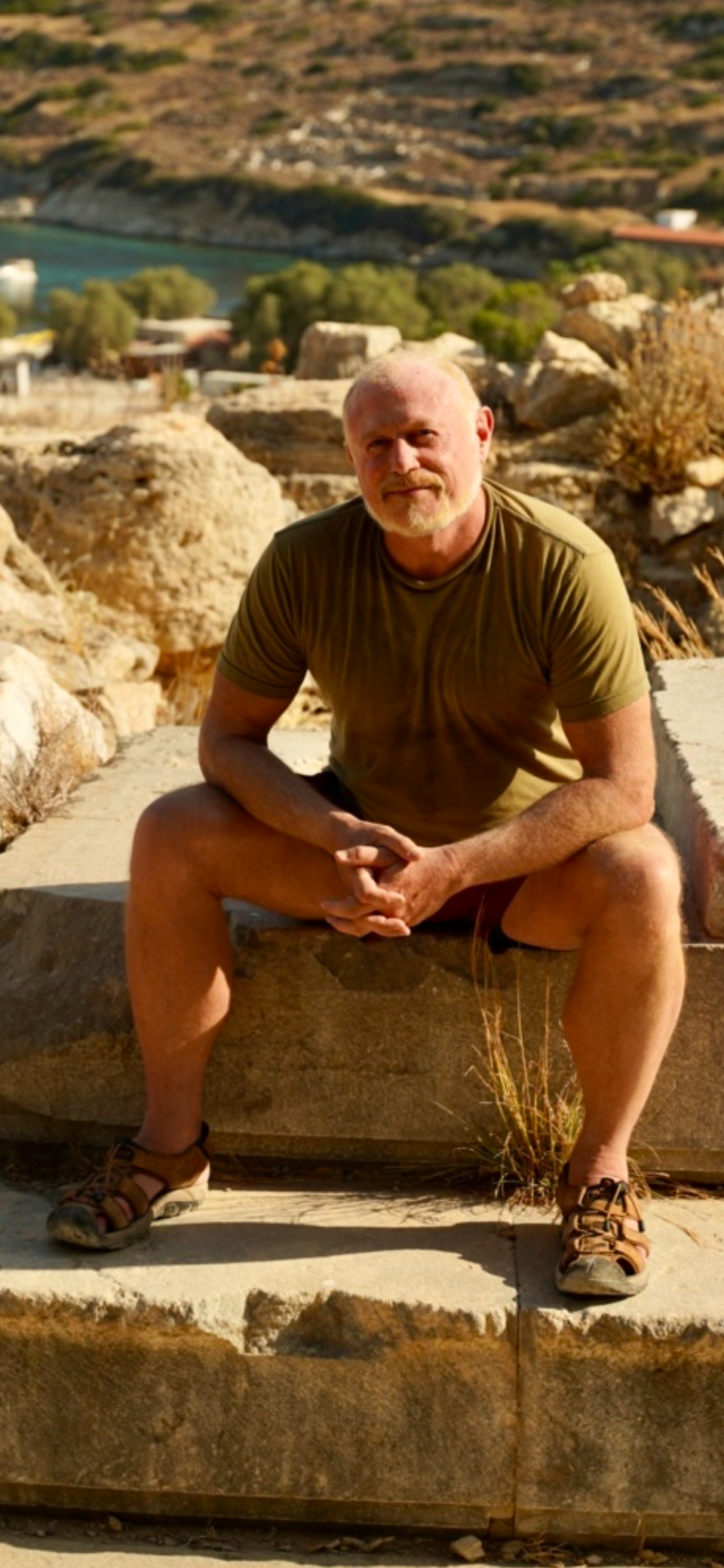
Meet Steve - Your Travel Host
Steve Morris is the founder of Chosen Atlas, creating thoughtful LGBTQ-focused journeys built around the places, people and stories that make travel memorable.
With more than a decade of experience in the travel industry, Steve takes care of the journey around the investigations: the hotels, transport, meals, local arrangements and all the details that turn eleven days of ambitious ideas into a holiday you can actually enjoy.
Neil brings the stories. Chosen Atlas creates the journey.
What makes this special
Meet the people who know
We’re not relying on a guidebook and a well-rehearsed speech. Where possible, we’ll meet historians, archaeologists and local experts who can take us deeper into the stories we’re investigating.
Eat together
This is Italy. Food isn’t what happens between the history. Long lunches, local restaurants, wine and time around the table are part of the experience.
Go beyond
Some of our destinations are famous. Others are places most visitors never reach. Either way, we’re interested in the stories hiding behind the postcard view.
Know you're looked after
This is a small group of just 8–10 guests. Transport, hotels and the main experiences are arranged for you, while the itinerary deliberately leaves enough breathing room to make the trip feel like a holiday.
The Finer Details
Dates: [13 - 24 MAY 2027 | CONFIRMED DATES]
Duration: 11 days / 10 nights
Group size: 8 to 10 guests
Starting point: Your airport
Destination: Rome, Italy
Accommodation: [GAY OWNED B&B ]
Price: £[XXX] per person
Single supplement: £[XXX]
Deposit: £[XXX]
Payment schedule: [DETAILS]
Your price includes
• 10 nights accommodation
• Airport transfers
• Private transport during the experience
• X X X
• X X X
• X X X experience
• X X X X experience
• X X X evening arrangements
• X X X party
• Local hosts and experiences
Not included
• Flights
• Travel insurance
• Personal spending
• [ANY MEALS / DRINKS NOT INCLUDED]
• [ANY OTHER EXCLUSIONS]
This is intentionally a small group. If you'd like to join us, register your interest below and I'll send you the confirmed dates, final itinerary and pricing once everything is locked in.
[8 TO 10 PLACES ONLY]
No payment is required at this stage.
Sounds good so far?
We’re creating something small, personal and genuinely different: eleven days in Italy chasing stories you probably wouldn’t find on your own, with enough time left over to remember you’re on holiday.
If you’d like to join us or simply want to hear more as the final details fall into place — register your interest below.
There are only 8–10 places.
No payment. No commitment right now. We’ll keep you updated as the final itinerary and booking details are confirmed.